The Cyber Kill Chain
The Cyber Kill Chain framework is a model for identification and prevention of cyber intrusions activity. The model identifies what the adversaries must complete in order to achieve their objective. To succeed, an adversary needs to go through all phases of the Kill Chain.
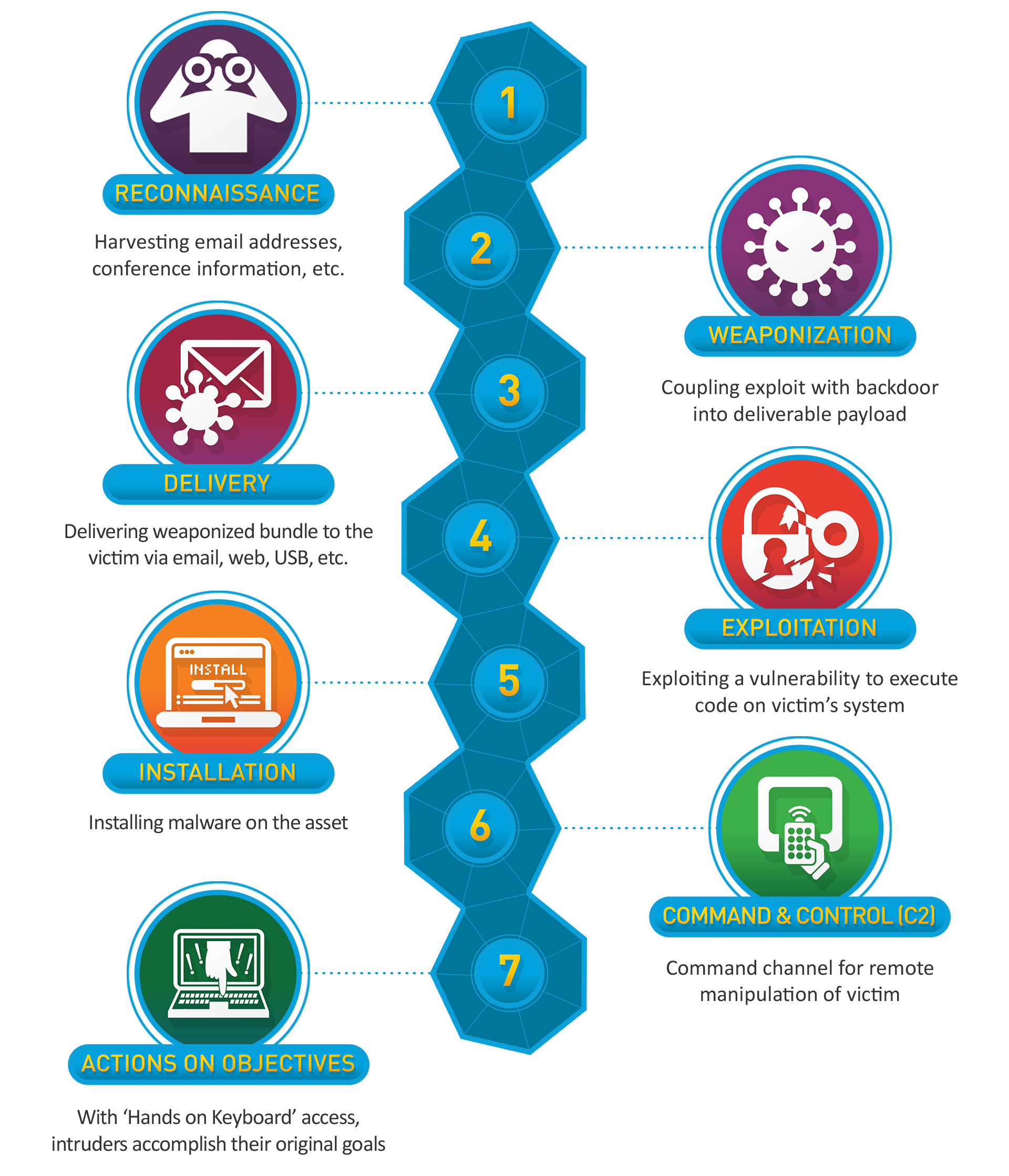
-
Reconnaissance - Reconnaissance is discovering and collecting information on the system and the victim. The reconnaissance phase is the planning phase for the adversaries. OSINT is the first step an attacker needs to complete to carry out the further phases of an attack. The attacker needs to study the victim by collecting every available piece of information on the company and its employees, such as the company's size, email addresses, phone numbers from publicly available resources to determine the best target for the attack.
-
Weaponization - In the weaponization stage, all of the attacker’s preparatory work culminates in the creation of malware to be used against an identified target. Weaponization can include creating new types of malware or modifying existing tools to use in a cyberattack.
-
Delivery - In the delivery stage, cyberweapons and other Cyber Kill Chain tools are used to infiltrate a target’s network and reach users. Delivery may involve sending phishing emails containing malware attachments with subject lines that prompt users to click through. Delivery can also take the form of hacking into an organization’s network and exploiting a hardware or software vulnerability to infiltrate it.
-
Exploitation - In the exploitation step of the Cyber Kill Chain, attackers take advantage of the vulnerabilities they have discovered in previous stages to further infiltrate a target’s network and achieve their objectives. In this process, cybercriminals often move laterally across a network to reach their targets.
-
Installation - After cybercriminals have exploited their target’s vulnerabilities to gain access to a network, they begin the installation stage of the Cyber Kill Chain: attempting to install malware and other cyberweapons onto the target network to take control of its systems and exfiltrate valuable data. In this step, cybercriminals may install cyberweapons and malware using Trojan horses, backdoors, or command-line interfaces.
-
Command and Control - In the C2 stage of the Cyber Kill Chain, cybercriminals communicate with the malware they’ve installed onto a target’s network to instruct cyberweapons or tools to carry out their objectives.
-
Actions on Objectives - After cybercriminals have developed cyberweapons, installed them onto a target’s network, and taken control of their target’s network, they begin the final stage of the Cyber Kill Chain: carrying out their cyberattack objectives. While cybercriminals’ objectives vary depending on the type of cyberattack, some examples include weaponizing a botnet to interrupt services with a Distributed Denial of Service (DDoS) attack, distributing malware to steal sensitive data from a target organization, and using ransomware as a cyber extortion tool.